Summary
The third quarter of 2026 presented a dynamic macro backdrop characterized by sticky underlying inflation, surging energy prices, and evolving monetary policy expectations. As crude oil pushed past $100 per barrel and domestic debt breached $40 trillion, benchmark 5-, 10-, and 30-year Treasury yields broke above 5%. This upward rate pressure, combined with persistently above-target inflation, prompted the Federal Reserve to maintain a hawkish stance, prolonging elevated borrowing costs across the economy. Despite these headwinds, equity markets remained resilient, supported by healthy corporate earnings and selective outperformance among companies with robust cash flows. In fixed income, government yield curves steepened amid heavy sovereign debt issuance and corporate borrowing. In this edition of the Market Comments, we will examine the interplay between persistent inflation and labor resilience, shifting equity dynamics, and the evolving rate landscape across the fixed income curve.
The Economy
The domestic economic backdrop faced renewed tests throughout the third quarter from persistent inflation and geopolitics. Crude oil prices remained elevated near $90 per barrel throughout the summer before pushing past $100 late in the quarter, driven by Middle East tensions and tight global supply. These higher commodity input costs kept headline PCE inflation elevated at 3.4% year-over-year in August. Core PCE, the Fed’s preferred inflation measure that excludes food and energy prices, moderated slightly to 3.0%, yet remains stubbornly above its 2.0% target. These readings confirmed that underlying price pressures extend beyond volatile fuel costs, maintaining persistent upward pressure on benchmark Treasury yields.
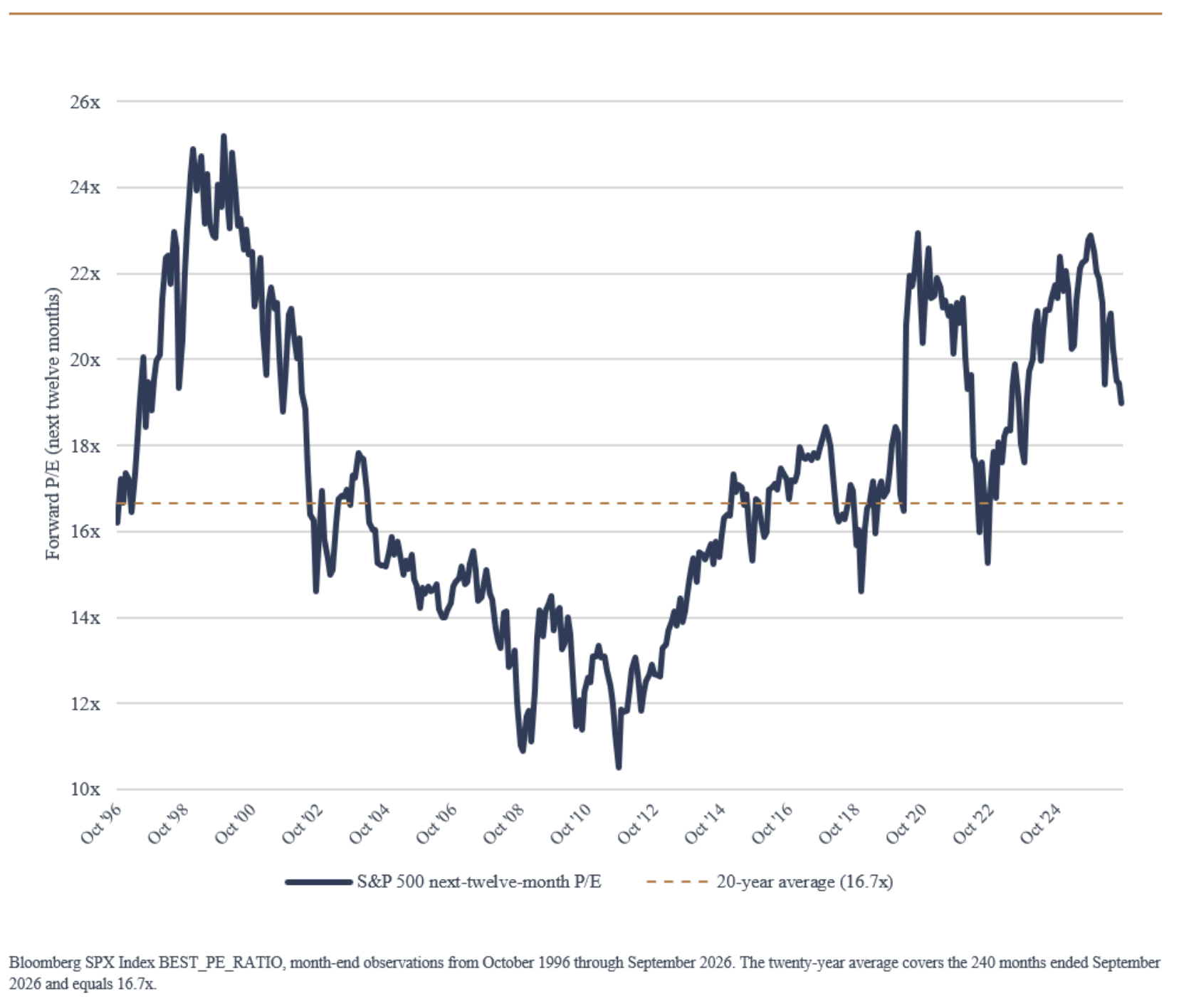
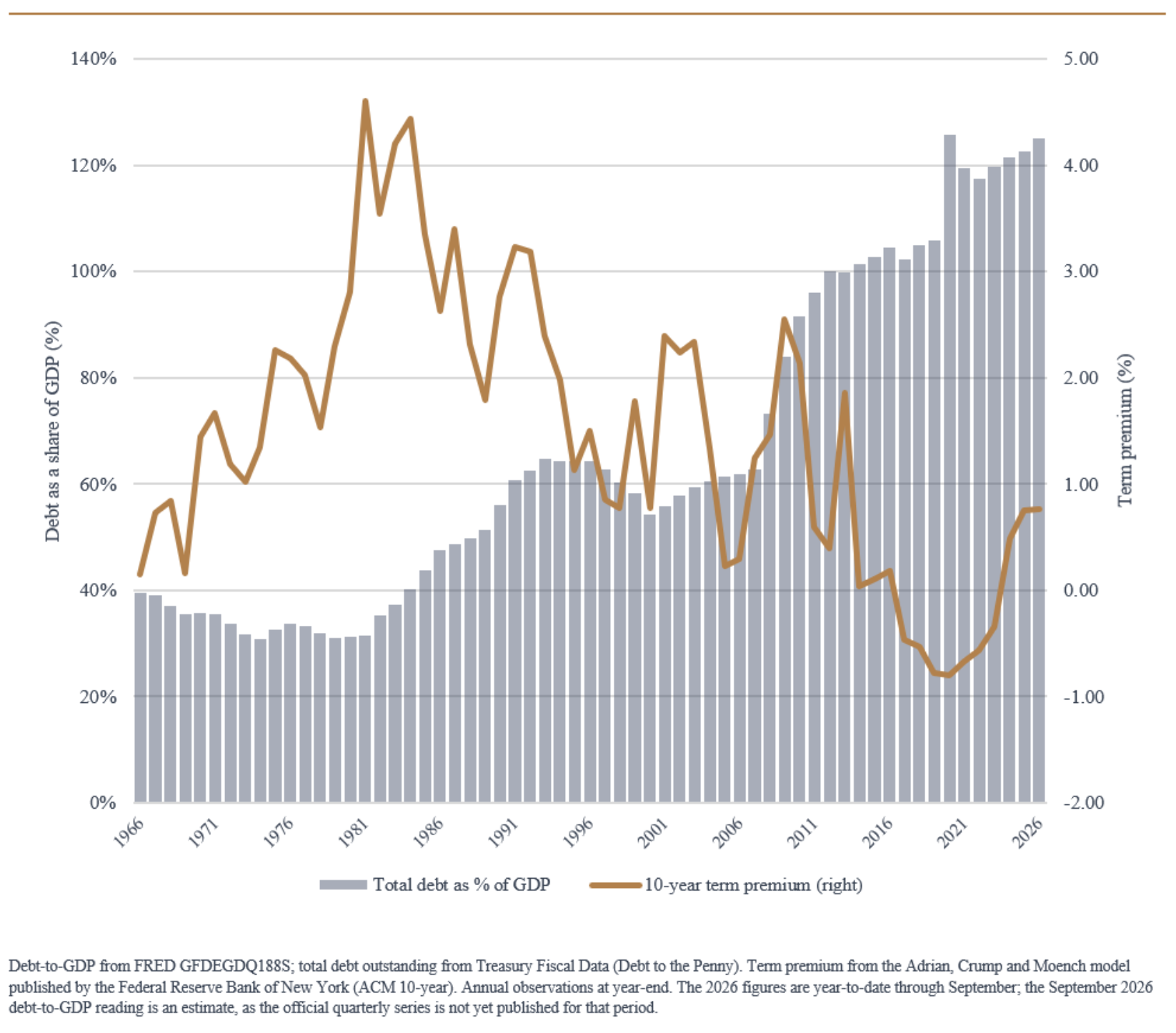
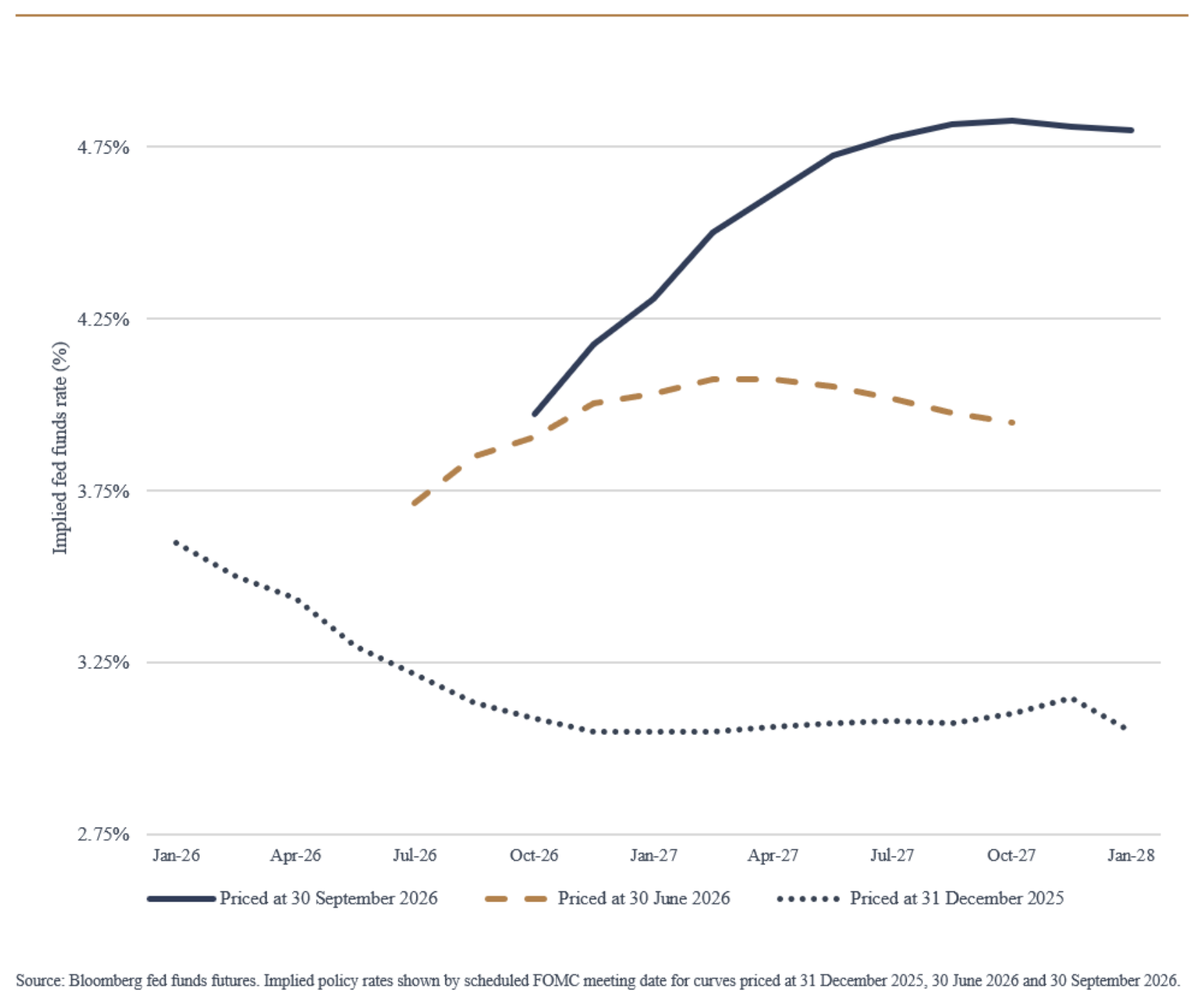
In response to these stubborn inflation prints, the Federal Reserve raised the federal funds rate by 25 basis points at its September meeting, its first increase in over three years. Central bank officials reinforced this move with a resolute, hawkish policy message that quickly rippled across bond and equity markets, driving sovereign yields to multi-decade highs and compressing rich growth multiples. Consequently, financial markets have priced in 75 basis points of rate increases over the next nine months. Massive federal budget deficits further amplified these upward rate pressures, pushing total U.S. government debt past the $40 trillion mark (roughly 125% of gross domestic product). This growing level of federal debt is causing investors to demand higher yields for holding long-term bonds, reigniting critical debates surrounding long-term fiscal sustainability. Looking ahead, the upcoming November midterm elections will draw significant market attention, as the resulting legislative makeup will ultimately shape future tax policies, regulatory frameworks, and federal spending priorities.
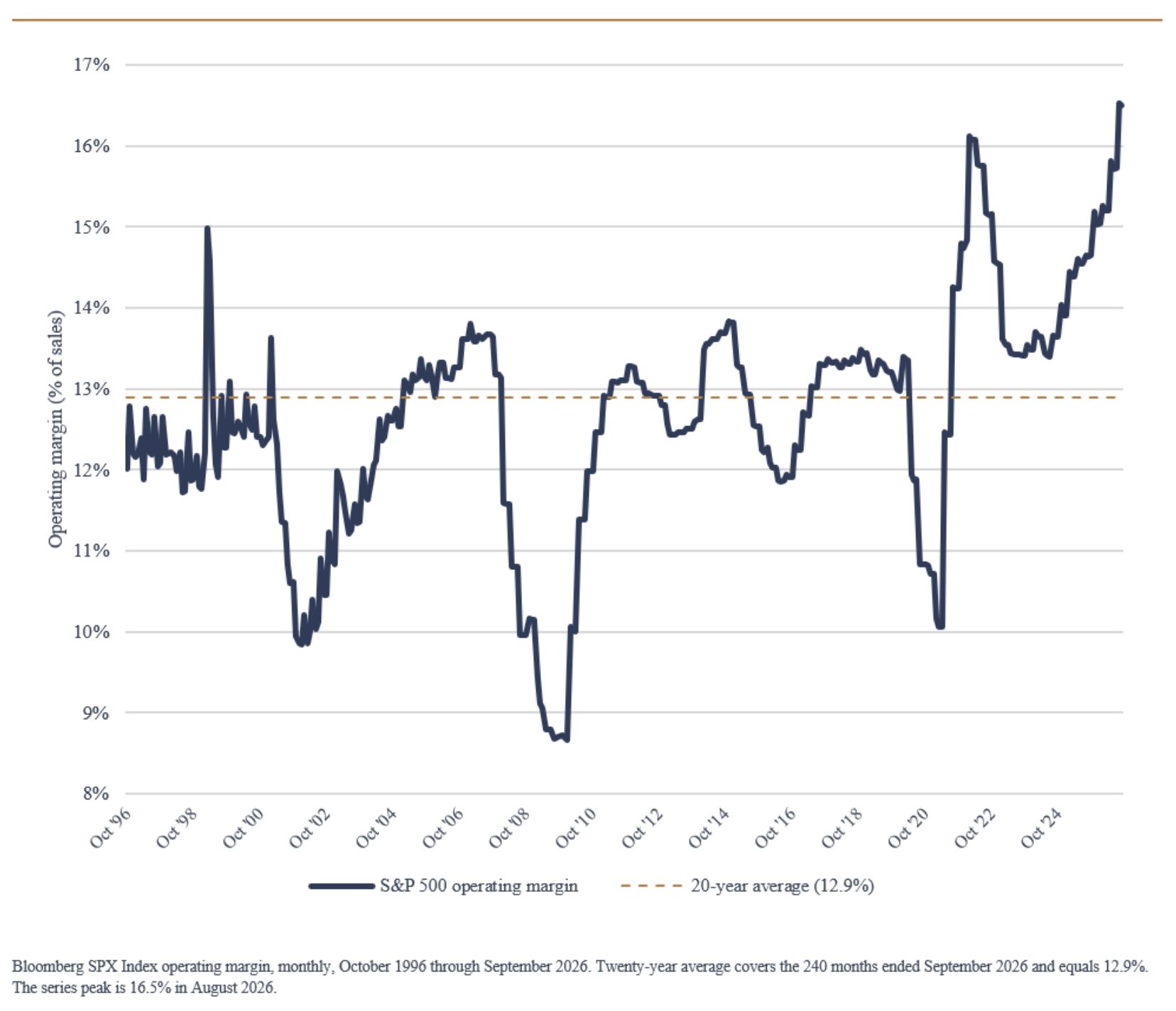
Despite these rising cost hurdles, the core domestic economy displayed remarkable underlying strength. U.S. employment data consistently surprised to the upside, with the unemployment rate holding low at 4.1% alongside steady payroll gains and a constructive rebound in labor force participation. This robust labor backdrop provided essential support to household incomes, allowing aggregate consumer spending to remain resilient even as broad sentiment stays cautious and a growing economic divergence forces lower-income households to draw down their savings buffers. Simultaneously, accelerating corporate capital investment in domestic artificial intelligence infrastructure is driving a rebound in productivity growth, with forecasts projecting an incremental 1.5% annual boost by the end of the decade. This structural productivity lift potentially serves as a vital economic shock absorber, helping U.S. businesses defend operating margins in the face of elevated input costs.
Another contributing factor to current economic stability has been the steady recovery in domestic manufacturing. Federal industrial policies and multi-year corporate reshoring initiatives continue to direct billions of dollars into high-tech domestic manufacturing facilities. This steady flow of private and public capital into both advanced manufacturing and AI data centers has sustained heavy industrial construction activity across the country, offsetting headwinds from interest-rate-sensitive sectors like residential housing. However, the unprecedented power consumption requirements of advanced manufacturing and compute infrastructure have begun straining regional electric utility grids. As utility providers scramble to meet this expanding load, access to reliable, commercial-scale electricity has emerged as a primary bottleneck for future capital investment and industrial expansion.
Equity Markets
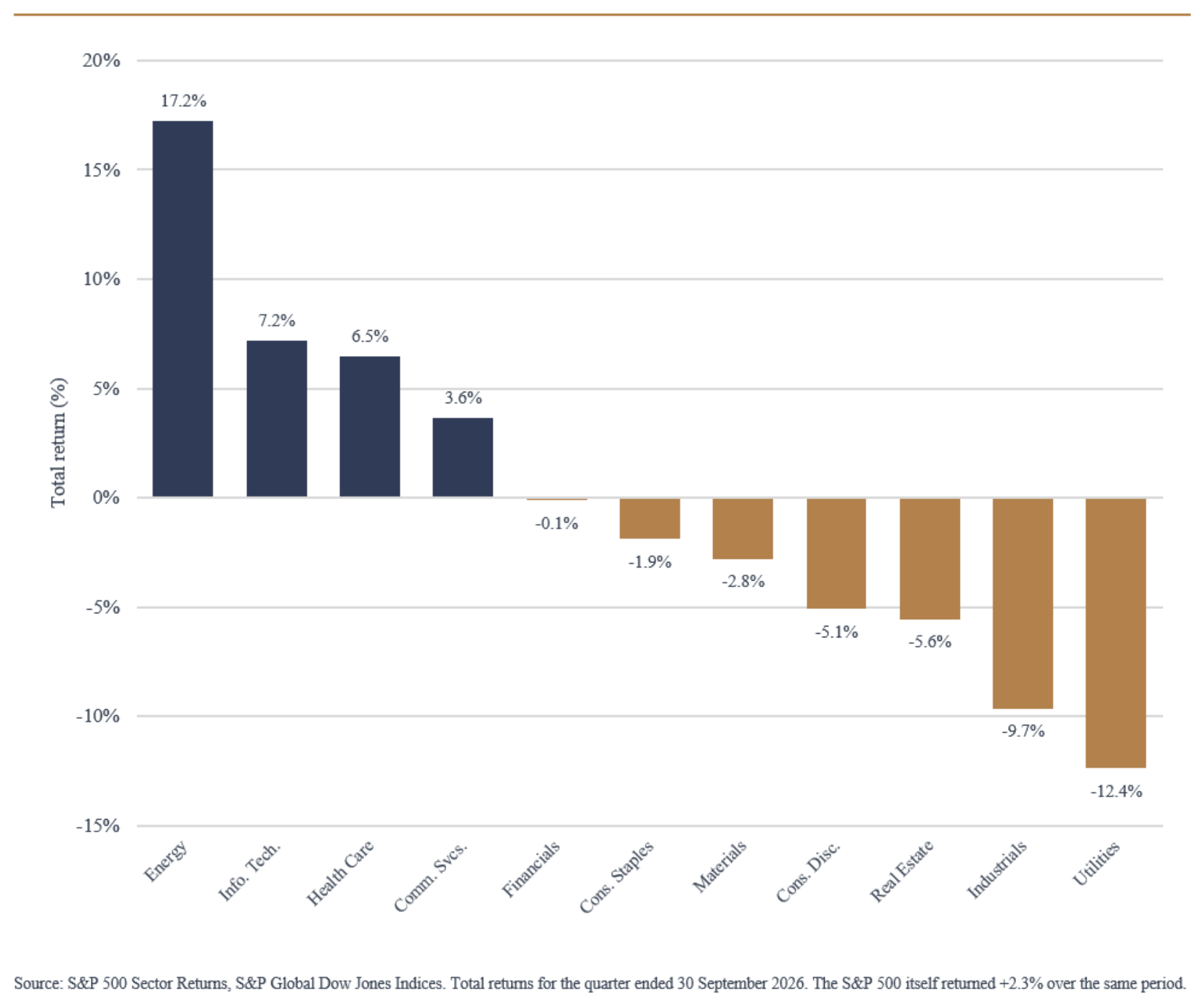
Equity markets were mixed for the quarter, as the Dow Jones Industrial Average declined 2.3% and the S&P 500 Equal-Weight Index slipped 1.9%, while the cap-weighted S&P 500 and tech-heavy Nasdaq Composite posted modest gains of 2.3% and 2.6%, respectively. Beneath the surface of these headline movements, market leadership pivoted away from crowded, high-multiple AI infrastructure and equipment providers toward companies trading at more reasonable valuations. The Magnificent Seven cohort delivered strong aggregate outperformance based on their durable balance sheets, while the broader market narrative expanded to include a wider array of industries. Investors increasingly gravitated toward businesses with high earnings visibility, creating a performance divide between well-capitalized, structurally insulated market leaders and enterprises vulnerable to elevated borrowing costs.
Surging crude oil prices provided an immediate boost to corporate cash flows across the domestic energy complex. Healthcare companies benefited from defensive balance sheets and clinical advancements, offering steady earnings resilience against broader macro volatility. Conversely, as benchmark Treasury yields pushed past 5%, classic bond-proxy sectors including utilities, real estate, and consumer staples faced pressure from a rising cost of capital. These rising rate dynamics also triggered multiple compression across previously high-flying momentum leaders, particularly semiconductor equipment providers and data-center industrial suppliers that entered the quarter at higher valuations.
Corporate financing decisions also played an influential role in driving performance dispersion across large-cap equities. While traditional cash-generative leaders continued returning capital through dividends and buybacks, mega-cap technology firms increasingly turned to capital markets to fund massive infrastructure outlays. The volume of secondary share offerings and corporate bond issuance required for data center expansions has introduced new dilution and capex scrutiny. Investors have grown more discerning regarding whether multi-year capital outlays will translate into sustainable free cash flow growth, leading high-profile AI developers to defer anticipated public listings until valuation multiples stabilize. Consequently, market participants are demonstrating a disciplined preference for companies that can fund organic operations without relying on aggressive balance sheet expansion.
Beyond balance sheet concerns, the AI infrastructure cohort faced mounting operational friction with the potential to delay near-term earnings realization. The accelerated physical rollout of new data centers collided with intensifying regulatory debates regarding AI governance and safety standards. More tangibly, heightened political scrutiny ahead of the midterm elections introduced the threat of widespread project permitting delays and local zoning moratoriums. When combined with emerging hardware competition from overseas manufacturers, these real-world bottlenecks are prompting investors to reassess the deployment timelines and ultimate profitability of the sector’s massive infrastructure investments.
At Guyasuta, this environment reinforces our philosophy of favoring stocks that have sustainable free cash flow and durable balance sheets over momentum investing. We remain focused on businesses with high return on invested capital, strong competitive moats, and the pricing power required to preserve cash flows amid sticky inflation. By maintaining balanced exposure across energy, industrials, and technology, our equity strategy remains well-positioned to navigate shifting sector tides. While sector rotations can introduce short-term relative headwinds, our commitment to business quality ensures portfolios remain anchored in sustainable economic value. We will maintain our disciplined investment approach, prioritizing businesses that demonstrate consistent compounding power rather than chasing valuation-stretched stocks.
Fixed Income Markets
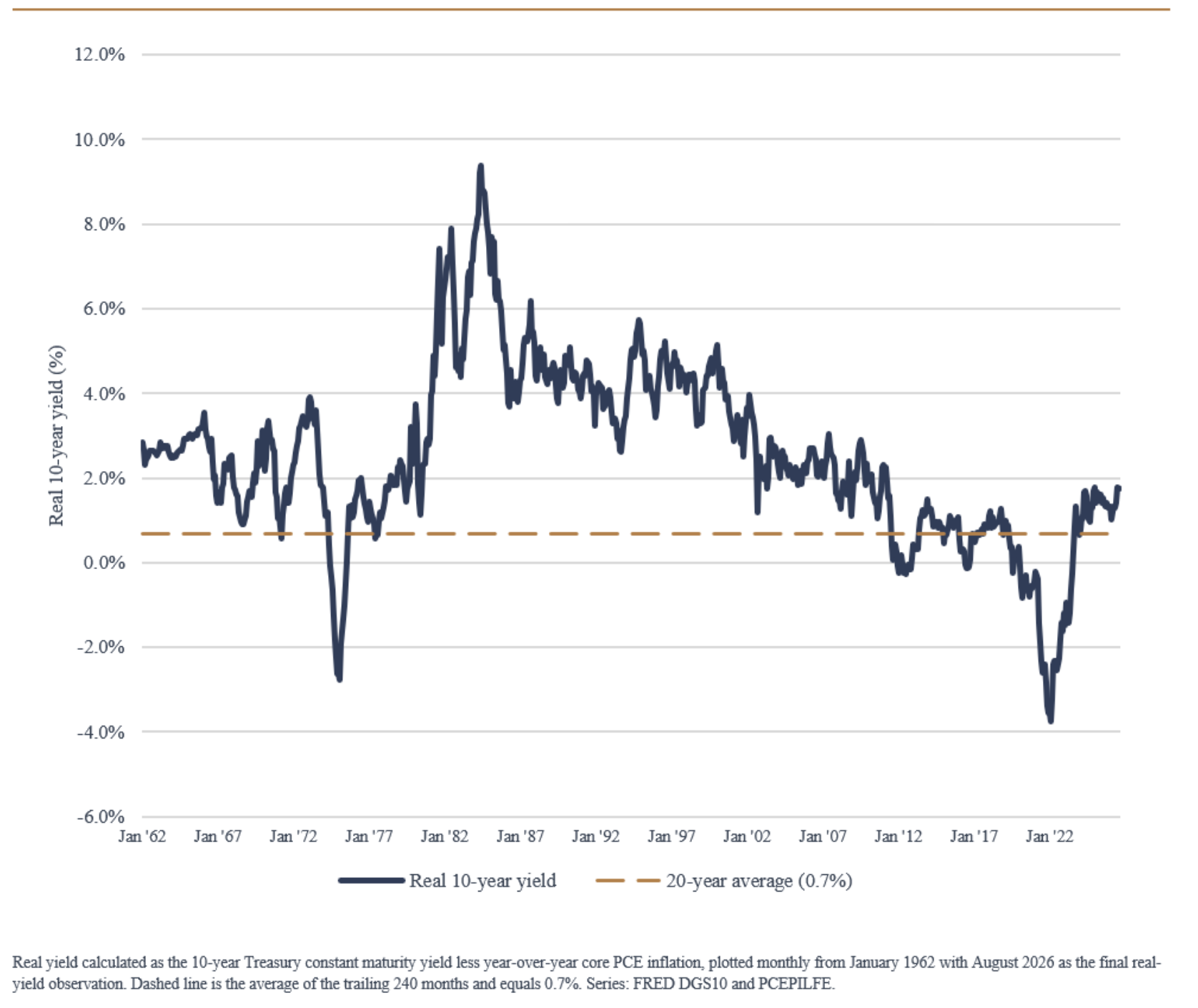
Fixed income markets experienced an aggressive repricing across the yield curve during the third quarter. Benchmark U.S. 5-, 10-, and 30-year Treasury yields broke decisively above 5.0%, reaching multi-decade highs and introducing a modest steepening to a flat yield curve. This upward rate pressure was propelled by persistent inflation prints and heavy Treasury auction supply required to fund the $40 trillion federal debt. Investors also adjusted to a more restrictive monetary path as forward markets began pricing in an additional Federal Reserve hike in 2026. Looking ahead, interest rate futures now reflect three additional quarter-point increases by June 2027, pointing to a higher-for-longer rate environment.
Different policy paths among global central banks added another layer of turbulence to international bond markets. When the Bank of Japan raised its interest rates, it forced global investors to rapidly unwind complex cross-border currency positions known as the yen carry trade. To help ensure domestic markets continued to function smoothly amid this broader volatility, the U.S. Treasury expanded its ongoing program to buy back older government bonds. While this structural support improved trading conditions, the larger issues of persistent inflation and massive federal borrowing kept overall interest rates elevated. Ultimately, this combination of shifting global capital and a heavy supply of new U.S. debt continued to push yields higher across all government bonds.
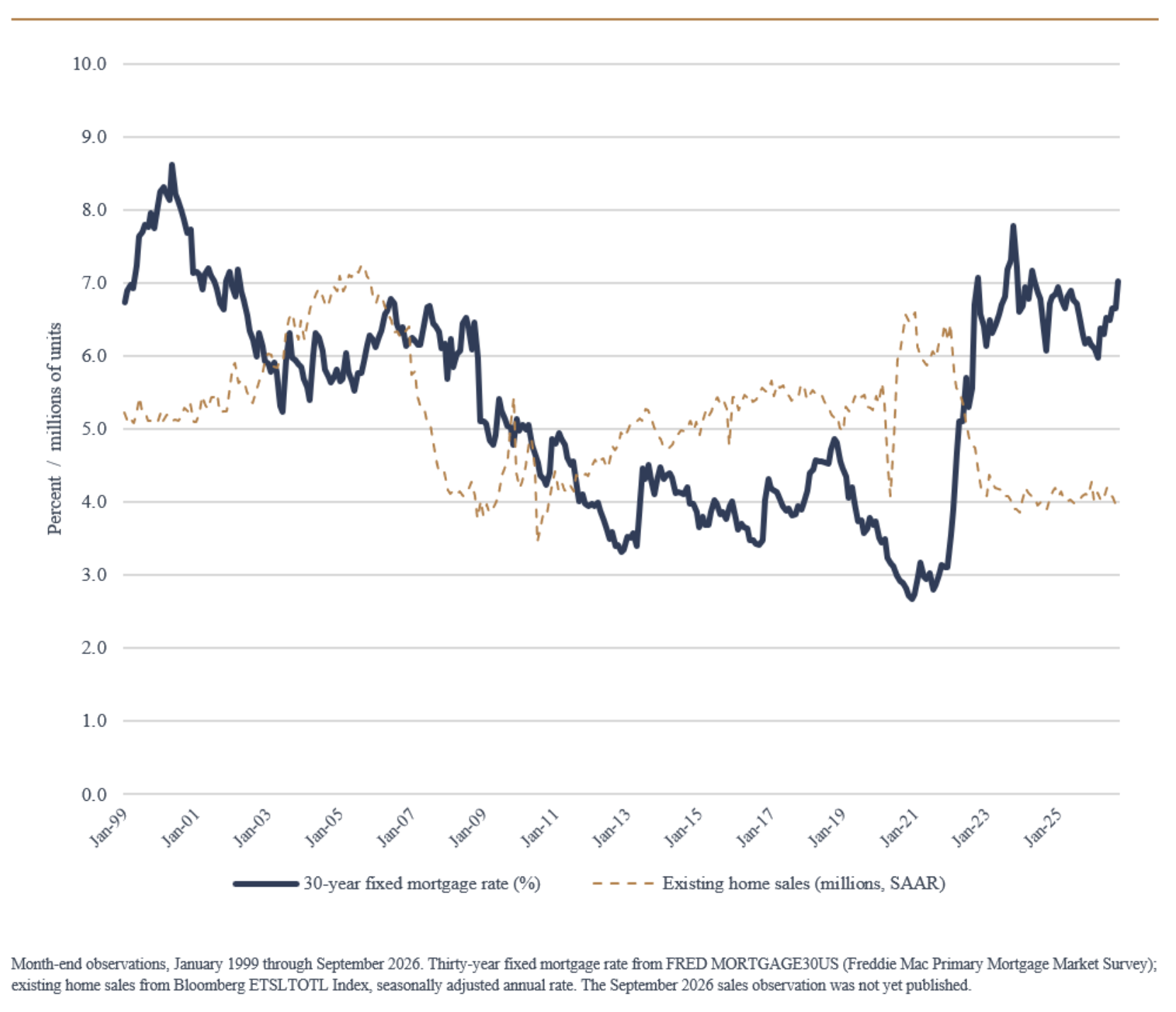
This higher-rate environment is simultaneously exposing notable structural stress across alternative and rate-sensitive credit channels. The rapid climb in benchmark yields pushed 30-year mortgage rates above 7.0%, keeping residential transaction volumes subdued and freezing secondary housing turnover. The multi-trillion-dollar private credit sector faces mounting headwinds as elevated borrowing costs strain lower-tier corporate borrowers. Several prominent semi-liquid private debt funds again exercised quarterly redemption limits as withdrawals remained elevated, underscoring the risk and liquidity mismatch participants failed to underwrite in their search for yield. For active investors, these withdrawal constraints serve as a timely reminder that chasing incremental yield in unlisted assets often sacrifices portfolio flexibility when macroeconomic conditions tighten.
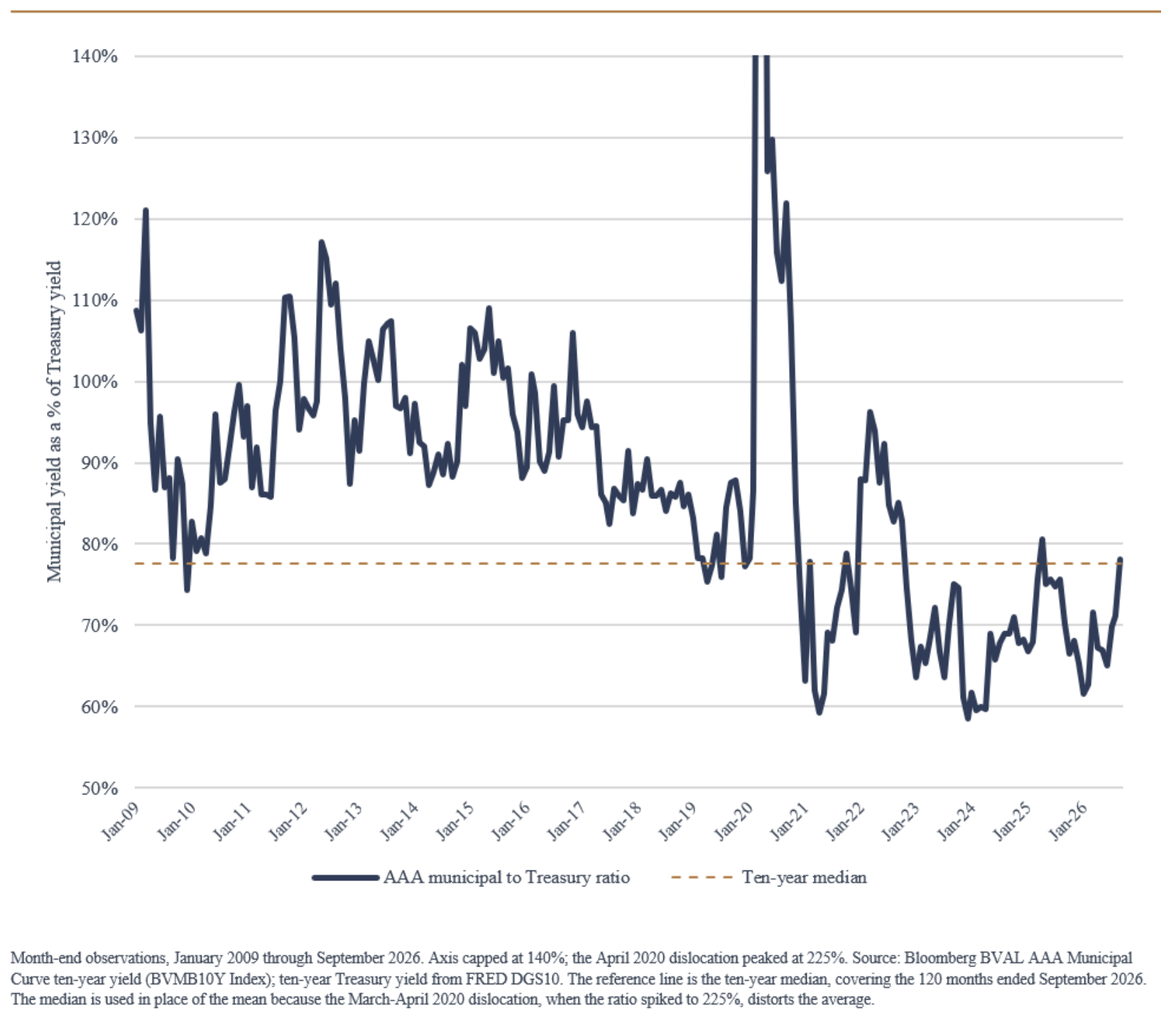
Despite rising risk-free benchmark yields, investment-grade corporate credit fundamentals demonstrated notable durability. Balance sheets entered this cycle with conservative leverage profiles, enabling investment-grade rating upgrades to outpace downgrades across the broader public market. However, massive capital spending by technology hyperscalers, who have issued over $250 billion in debt year-to-date for artificial intelligence infrastructure, created isolated pockets of credit pressure. This record supply of longer-dated corporate debt has generated attractive relative value in short- and intermediate-maturity paper without compromising fundamental credit quality. At Guyasuta, our customized bond ladders emphasize intermediate durations for taxable corporates to navigate the flat yield curve, while selectively extending duration within tax-exempt municipals where valuations remain historically attractive relative to taxable alternatives.
Conclusion
The third quarter illustrated that navigating persistent inflation and fiscal debt pressures requires patience, vigilance, and structural portfolio balance. Although elevated interest rates and geopolitical fragmentation introduce ongoing headline volatility, underlying corporate cash flows and a forecasted incremental 1.5% annual productivity boost from AI continue to offer solid investment foundations. At Guyasuta, our investment approach remains anchored in rigorous fundamental analysis, high asset quality, and personalized alignment with your long-term wealth objectives. We thank you for your continued confidence and partnership, and we look forward to assisting with all your wealth and planning needs.
Operating margins sit at series highs as AI productivity meets cost pressure
Forward multiples have compressed toward, but remain above, the twenty-year average
The third quarter cooled momentum broadly, not semiconductors alone
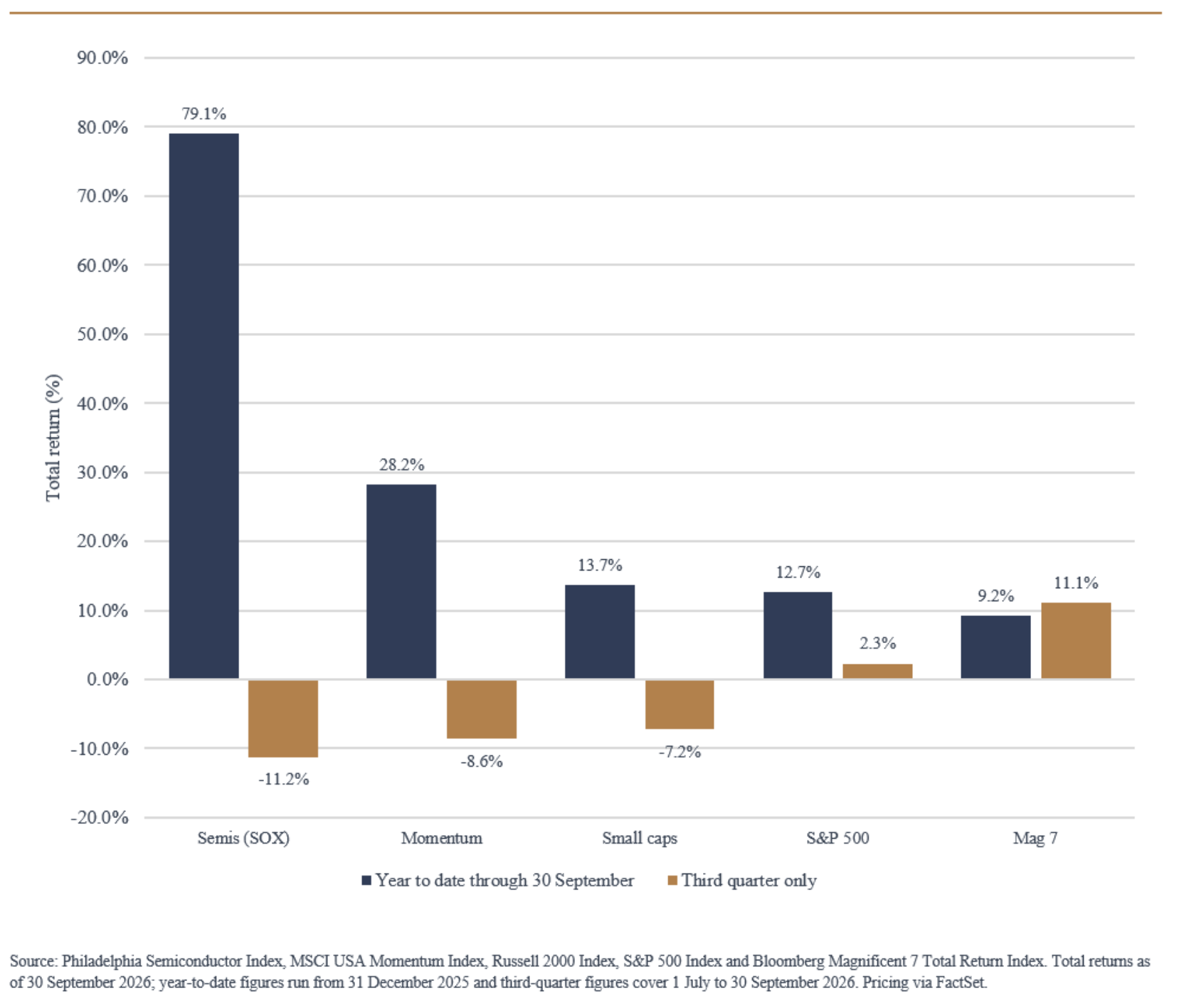
Higher yields weighed on rate-sensitive sectors in the third quarter
The real 10-year yield sits near post-2011 highs and above its long-run average
Investors again demand extra yield to hold long-term Treasuries
The market has repriced from cuts to three more hikes
Municipals look attractive
Mortgage rates above seven percent keep housing turnover near post-crisis lows